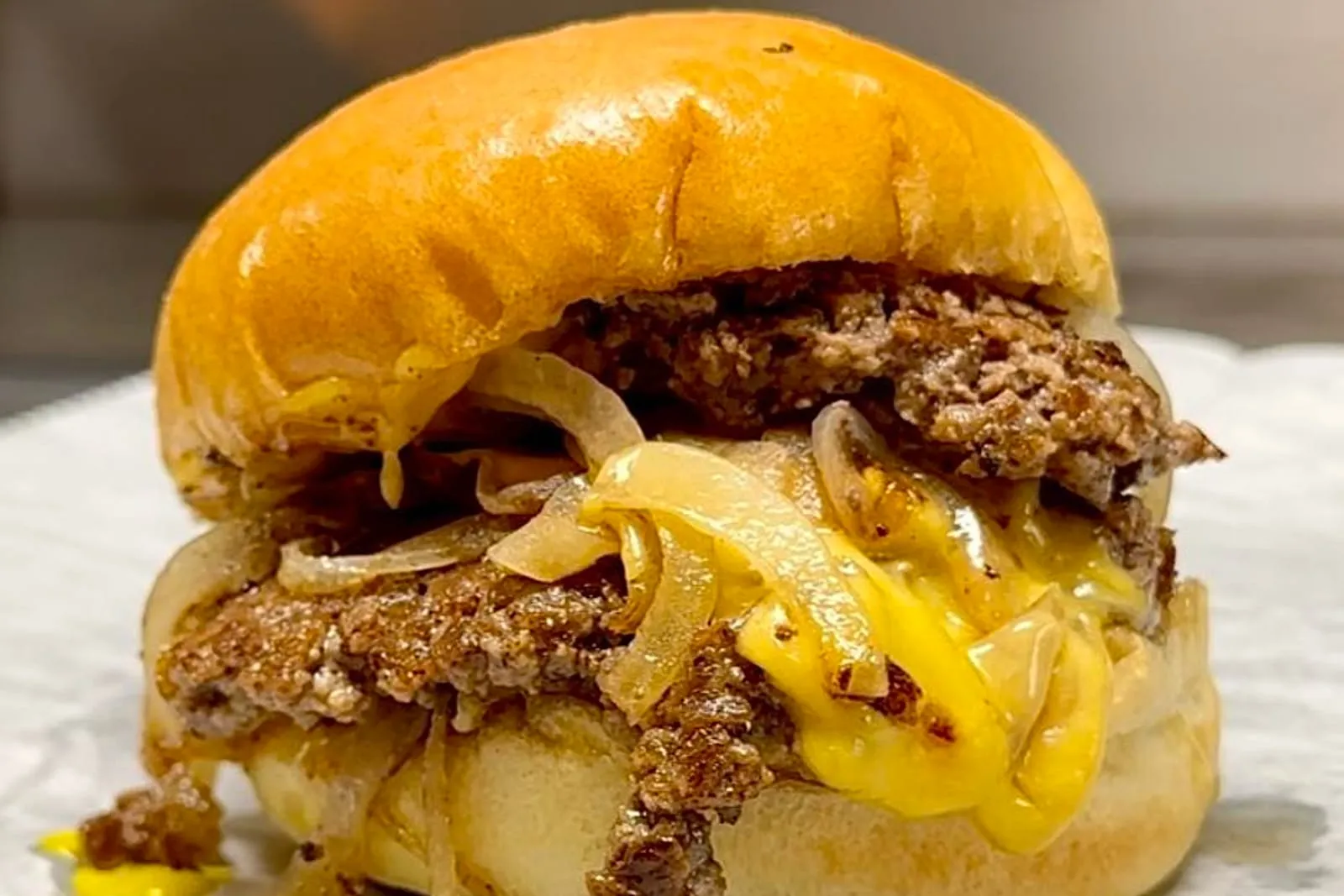
The Oklahoma onion burger is what happens when a smash burger and a pile of onions become best friends under pressure. It is cheap, simple, a little messy, and honestly one of the best arguments for keeping a bag of onions in the house.
Quick take: Learn what makes an Oklahoma onion smash burger different, how to slice the onions, when to smash them, and how to build one at home.
What Makes It Different
A regular smash burger presses beef into the griddle. An Oklahoma onion burger presses thin sliced onions into the beef while it cooks. The onions steam, fry, sweeten, and tangle into the patty. You get beef crust on one side and soft, browned onion on the other.
The style is tied to Oklahoma diner history, where cooks used onions to stretch beef and add flavor. It stuck around because it tastes great, not because everyone got nostalgic for math during the Great Depression.
The burger is usually built simply: beef, onions, American cheese, pickles, mustard, and a soft bun. That is plenty.
Slice the Onions Thin
The onion cut matters. You want very thin slices. Thick onions will not soften fast enough, and then you get crunchy onion ropes pulling out of the burger with every bite. Not ideal.
Use a sharp knife or mandoline if you are comfortable with one. White or yellow onions both work. White onions taste sharper. Yellow onions get a little sweeter. I usually use yellow because they are easy to find and forgiving.
Salt the onions lightly after slicing and let them sit for a few minutes if you want them to soften faster. Then squeeze out a little extra moisture with a towel. You do not need to make them bone dry, but you also do not want onion soup landing on your griddle.
How to Cook It
Heat your pan or griddle until it is hot. Place a 3-ounce beef ball on the surface. Immediately pile a small handful of onions on top. Cover with parchment and smash hard. The onions should press into the beef, not sit politely on top like garnish.
Season the exposed onion side with salt. Let the beef side cook until the bottom crust is deep brown. This takes about 60 to 90 seconds depending on heat and size.
Scrape under the patty and flip it so the onions are now on the griddle. Add American cheese right away. The onions will cook in the beef fat while the cheese melts. This is where the whole kitchen starts smelling like a diner, which is a good sign unless you live with someone who hates joy.
Keep the Build Simple
The onion burger does not need a heavy special sauce. Mustard and pickles are enough. The onions are already doing a lot of flavor work.
Use a soft bun. Potato rolls, squishy white buns, or small hamburger buns all work. Toasting is nice, but do not toast the bun so hard that it fights the soft onions.
If you want sauce, use a thin mayo-mustard mix. But try the classic build first. Beef, onions, cheese, mustard, pickles. It is popular for a reason.
Where People Mess It Up
The first mistake is too many onions. I love onions, but if the pile is bigger than the beef, the patty can steam and fall apart. Start with a modest handful.
The second mistake is onions that are too thick. Thin onions melt into the burger. Thick onions stay separate.
The third mistake is flipping too gently. You need to scrape hard so the beef crust comes with the patty. If you leave the crust behind, the burger still works, but you have robbed yourself in broad daylight.
Best Cheese and Sauce for This Style
American cheese is the best fit for an Oklahoma onion burger because it melts fast and acts like glue between the onions and beef. Sharp cheddar tastes good, but it can sit on top instead of melting into the messy onion pile. That is not the end of the world, but American is easier.
For sauce, yellow mustard is the classic move. It cuts the sweetness of the onions and the fat of the beef. Pickles do the same thing. Together they keep the burger from tasting heavy.
If you want a house sauce, keep it simple. Mayo, mustard, pickle juice, and a little ketchup is enough. Do not use a sweet barbecue sauce here unless you want the burger to taste like it got lost at a rib cookout.
Cooking for a Crowd
Onion burgers are great for a crowd because the ingredient list is short. The challenge is speed. Slice onions before anyone shows up. Portion the beef. Stack parchment squares. Put cheese on a plate. Get the buns ready.
Cook two or three patties at a time unless you have a big griddle. If you crowd the surface, the onions release moisture and the patties steam. You want onion flavor, not onion fog.
Serve them as they finish. The onion side is best right off the griddle, when the edges are still hot and the cheese is fully melted. Waiting around under foil makes the crust soft, and then the burger loses some of its whole reason for being.
Why It Works So Well
The onion burger works because it solves two problems at once. The beef side gets direct heat and crust. The onion side gets steam, fat, and browning. You end up with a burger that tastes rich and sweet without needing extra toppings.
It also has built-in balance. Onions bring sweetness and bite. Mustard brings tang. Pickles bring acid. American cheese brings salt and melt. None of these parts are fancy, but together they make sense.
That is the magic of the style. It is not trying to impress you with a long ingredient list. It just makes a small amount of beef taste bigger than it is.
The Bottom Line
The Oklahoma onion smash burger is easy, cheap, and wildly satisfying. It is also a great next step after you learn the basic smash burger.
Get the onions thin, smash them into the beef, keep the toppings simple, and let the griddle do its thing.
Quick Questions
What is an Oklahoma onion burger?
It is a thin burger where sliced onions are smashed into the beef and cooked on the griddle with the patty.
What onions are best for onion burgers?
White or yellow onions work best. Slice them very thin so they soften fast.
Do you put sauce on an Oklahoma onion burger?
You can, but mustard and pickles are the classic simple choice.